
The Manicured Life vs. The Life That Grows Wild
What we curate for the world
and what quietly grows within us are not always the same.
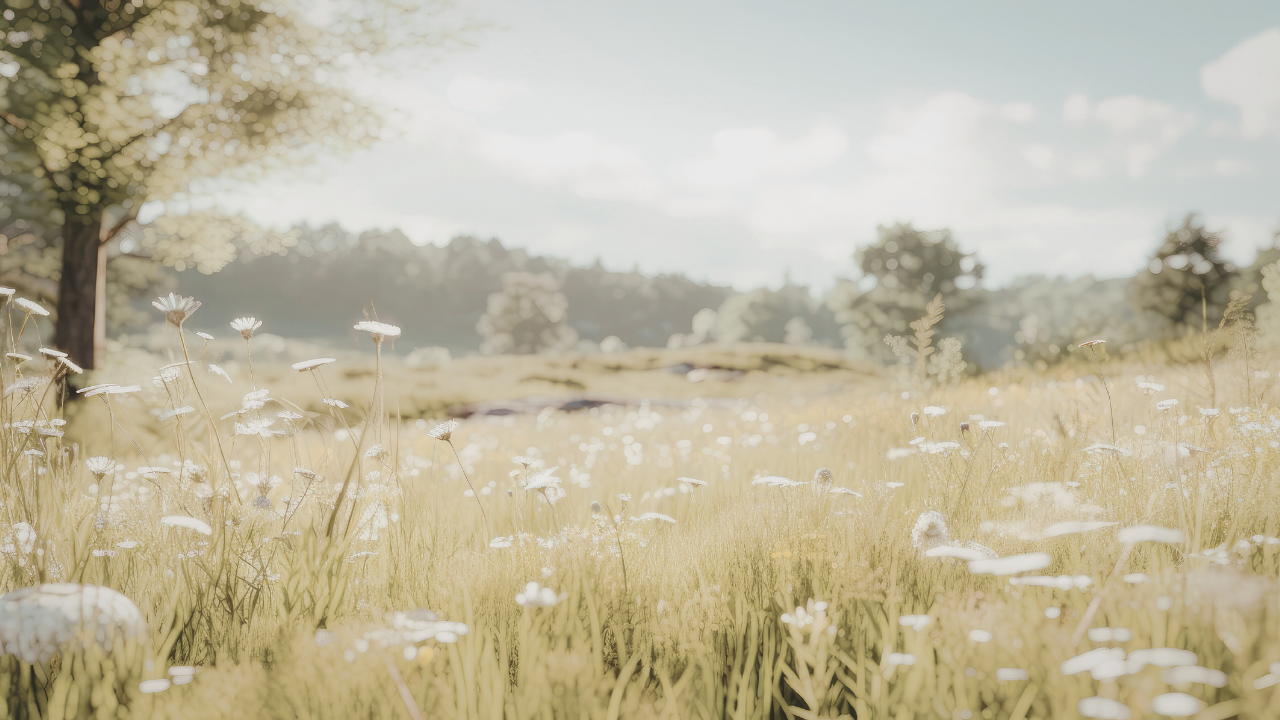
There's a yard not far from where I live that stops me every time I drive past it. Not because it's perfectly trimmed or because someone clearly spent a fortune on landscaping — but because it looks like a meadow. Scattered wildflowers, a little unruly, a little unpredictable. It looks like something actually grew there.
I can't stop thinking about that yard. Because I think it's the life I want.
Where I Come From, Things Had to Grow
I grew up in a small farming community in Western Kansas — about 2,500 people, flat land, and a sky so wide it felt like the whole world was underneath it. The land there doesn't perform. It just responds. Rain comes and things grow. Wind comes and things bend. The people I grew up around understood that you work with nature, not around it. You plant, you tend, and then you wait. You don't control what you can't control. You just hope the season is kind.
I remember my parents planting grass in our yard one summer. Not laying it down — planting it. There were patches of bare dirt with the tiniest little green hairs just barely poking through the surface, so fragile you almost couldn't believe they'd amount to anything. We weren't allowed to walk on them. We weren't allowed to run over them. My parents set a timer so they'd remember to move the water hose from one patch to the next — no sprinkler system, just patience and a garden hose and people who cared enough to show up and move it. That grass grew because someone tended it carefully, and because the conditions were right, and because it was given time.
That's just how things worked where I came from. Growth was slow. It was earned. And it was never guaranteed.
Years later, living in Dallas, then Denver, then Cincinnati, I started seeing a different kind of yard entirely. Pristine. Perfectly edged. Sod rolled out like carpet, not a blade of grass out of place. The first time I saw someone lay grass down like that, I genuinely couldn't believe it. I stood there, a little flabbergasted — a girl from Western Kansas who thought grass just... grew.
Not long ago my dad was walking through my neighborhood, taking it all in, and he said, wow, these yards and all this landscaping — it's incredible. He wasn't wrong. It is beautiful. But what I said was, nothing feels wild here, Dad. It all feels manicured.
And I've been sitting with that word ever since. Manicured. Not just lawns — but lives.
The Exhaustion of Getting It Right
When I think about a manicured life, I think about my 20s and 30s. The blow-dried hair. The makeup that took real time to put on. The scrolling through Pinterest, chasing whatever was trending that season. I wanted to look the part. I wanted to get it right.
And for some women, that is genuinely filling. Getting dressed up, finding the perfect outfit, wearing bold lipstick — that can be a form of joy and real creative expression. This isn't about shaming the glam. Some women come alive with it.
But for me, it was exhausting. It never quite felt like me. It felt like a version of me I was curating for other people.
What I Stopped Doing — and What I Found Instead
About two years ago, I made a pact with myself: no new clothes. If I'm going to buy something, it comes from a secondhand store — with the practical exceptions of bras, underwear, socks, and a swimsuit. At first it felt like a small financial decision. But it became something else entirely. I stopped scrolling. I stopped comparing. I stopped trying to figure out what I was supposed to want.
Most mornings now I wash my face, put on a little SPF moisturizer, push my glasses up, braid my hair, and I'm done. I wear one of three or four things in rotation and go on about my day. I think about Pamela Anderson — how she spent decades painted and performed, and then just stopped. And somehow she's never looked more like herself. There's something in that. Something about what happens when a woman finally stops performing and just lands in herself.
Things That Have Earned Their Wear
I think about my painting smock. When I first got it, I wanted to get paint on it immediately. I almost just painted it directly, before I ever wore it to create anything. Because a clean smock isn't a smock — it's a costume. A smock with paint splattered on it means someone used it. It means something happened there.
Same with my hiking shoes. I'm not trying to keep them clean. I want them to look like they've been somewhere. Like they've earned their wear.
There's something in me that trusts lived-in things. Things that show their use. Shoes that have walked somewhere, clothes that have been washed a hundred times, yards that have grown on their own terms.
Maybe because those things feel true. They're not performing anything.
You Are Allowed to Grow a Little Wild
I wonder how much energy we spend tending to a version of ourselves that was never really ours to begin with. How many mornings, how many mirrors, how many scrolling sessions were really just us trying to lay the sod down flat — to look like we had it together before we ever had the chance to actually grow.
The face you wash at night is a real and complete face. The life that's a little worn at the edges, a little unscheduled, a little harder to explain — that life is real too.
And if the glam genuinely fills you — if the lipstick and the ritual and the whole getting-ready process brings you something true — then wear it. But maybe the question worth sitting with is simply: is this mine, or is this manicured?
The manicured life looks beautiful from the street. But I keep pulling over for the wildflower yards. I keep lingering at the thing that looks like it just became itself, without anyone trimming it into shape.
That's the life I want to tend.