
The Wild - When a Simple Gesture Made Me Question Everything We’ve Been Asked to Tame
If you prefer to listen to this essay, you can do so on my YouTube channel
Esme woke up early, making it a slow easy morning before the bus stop. We recently started a tradition of playing cards while she eats breakfast. Since we had extra time, we pulled out a new game — Old Maid. She was still in her teal Princess Jasmine pajamas, her hair falling forward in front of her face. She always wears her hair down — a little past her shoulders, wild curls, thick and dark brown. My mother keeps asking her to put it up so she can see her face. “Her beautiful face,” she always adds. Her hair gets in her way sometimes, but Esme doesn’t mind. She goes about her day — eating, drawing, playing — wild curls just there.
As we played, each of us holding more than a handful of cards, I reached across her breakfast and tucked her hair behind her ear. She pushed my hand aside, barked, “stop it mom,” and continued looking at her cards.
I said sorry and immediately thought about my great-grandmother.
The Backyard, the Trees, and the Brush
I was a lucky kid — I had great-grandparents, and got to spend a lot of time with them. My brother and I loved going over to Great-Grandmother Ruth and Grandpa Vern’s house. She insisted on being called Great-Grandmother Ruth — even as a child I understood she cared about such things. They had the best trees to climb. Several evergreens and blue spruces, branches coming all the way down to where we could easily reach them, and from there it was like climbing a ladder. Charlie would always climb all the way to the top. I would go a little over halfway, then get nervous. Back then it wasn’t labeled risky play, it was just play. We loved those trees and would have stayed out there all day if it weren’t for our rumbling tummies.
Taking us greats to Pizza Hut was one of their favorite things — “a real treat,” they always called it. It was time to go, so Grandpa Vern called us in from our trees. They both directed us to wash our hands. Great-Grandmother Ruth looked at me and said, “Please go do something with your hair.” I was probably around five or six. I had no idea what she meant. Do something with my hair? I wouldn’t have even known where to find a brush in her house. I started to cry and ran to Grandpa Vern. He gave me a hug and directed me to the car.
That was thirty-five years ago.
The Mom Cut and What We’re Really Asking
This got me thinking about hair — my hair, my girls’ hair. Hair we tame once every two weeks if we are lucky. What does it represent? Is it culture, personality, a marker of youth? It’s just hair. And yet.
I have always had long, dark hair, cut only twice — once in junior high to my chin, once in high school to my shoulders. Outside of those two times, I’ve kept it long. I’ve had urges to cut it, but I’ve always talked myself out of it, or found someone to talk me out of it.
After Esme was born, the urge came back strong. I found myself scrolling short haircuts on Pinterest, and at some point I decided I was going to do it. I showed Jarrod the cut. He said, absolutely not. Do you really want a mom cut? I said no, and left my hair long. But I know why I asked him. I asked because I wanted him to say no. I wanted someone to talk me out of it, because I couldn’t quite trust myself to hold on.
I’ve been trying to understand what exactly I was holding on to.
It isn’t youth exactly — or it isn’t only that. It’s more like what youth stood for. The time when I climbed trees, ran around without a second thought, when I camped and dug in the dirt and played in the creek. When life was about exploring whatever was right in front of me. My hair feels like a thread back to that. To the wild, before I knew that was what to call it.
And that phrase— mom cut. I know what Jarrod meant. I know what we all mean when we say it. But I’ve been sitting with how strange it is. I know so many mothers who cut their hair and look just as beautiful as they ever did. The cut itself isn’t the thing. It’s the context. If they were childless and walked into a salon and asked for the same cut, it would just be a fresh look. A choice. But add the kids, the minivan, the years of putting everyone else first — and suddenly the same haircut becomes a category. A signal. She’s been managed now. She’s settled in.
Is that fair? No. Is it true? I’m still deciding.
Domestication and the Slow Surrender
I recently read Belle Burden's memoir, Strangers. It's the story of a middle-aged mother who was left abruptly by her husband, an affair with a younger woman, a family fractured — a sad and familiar scene. Belle was a practicing lawyer — but she didn't consider herself a working mom. Her primary focus was her family. In the book, she describes conversations with working women who suggested that maybe this is what happens when a woman doesn't have a career outside the home. That staying home made her more vulnerable to being left.
She was hurt by those comments. Rightfully so.
But I couldn’t stop thinking about them, especially since I am a stay-at-home mom myself. Condescending, yes. And yet — is there something buried in there worth looking at honestly? Not the blame. Not the idea that a woman’s career is her insurance policy against abandonment. But the quieter question underneath it: do the people who love us start to see us differently once we’ve settled into the domestic? Do they stop seeing the wild woman they met and start seeing only the role we’ve grown into? And more uncomfortably, do we do that to ourselves? Become so comfortable, so needed, so scheduled, that we forget to keep our edge?
That edge doesn’t have to be a career. It doesn’t have to be the hair. But are we slowly trading in our wildness for complete domestication — not all at once, but in small surrenders, one tuck at a time?
I think it goes for men too, though I can only speak from where I stand. We see it — the renewed urgency at the gym, the supplements, the hair transplants. From the outside it looks like vanity. Maybe sometimes it is. But maybe it’s something else entirely. Maybe it’s the same instinct as Esme moving my hand away when I reached across the breakfast table to smooth her curls.
Are we all just trying to find something that is still ours? Something that says — I am still here. I am still free.
The Pillar and the Hawk
How do we find the freedom in days that are so scheduled?
It starts on Sunday evening. By the time the girls are bathed and in bed, I have already laid out Esme’s school clothes, prepped her lunch box, set out my workout clothes, and loaded her backpack by the door. Sunday night is a quiet reprieve from a weekend of bouncing around. We all settle into what’s coming. Well — I do, at least.
Monday morning runs through me like a current. I wake up, write, handle a few work things, and by seven I have Bandit up — out, fed, out again — and then he trots into the girls’ room to wake Aura. She always wakes first. She snuggles with Bandit and gets herself dressed, and I have learned, carefully, to stay out of sight until she’s ready. If I appear too soon there will be a meltdown that wakes the other two. So I wait, just out of view, and get Esme’s yogurt ready, pack her snack for school, fill her water bottle. Then Aura goes to wake Esme — gently, telling her it’s morning.
Esme is the wild card. Will it be a good morning or will someone have peed in her cheerios? Today is a good morning.
All three breakfasts get served. Little Ivy calls from her bed, and I go retrieve her, get her dressed, and set her up with Grandma Bev Toast — cinnamon sugar toast, what my Grandma Bev used to make when we stayed with her. Jarrod likes his hot tea cold — I make sure it’s ready for him.
I know all of this before it happens. I am the rhythm the morning runs on.
We head to the bus stop. In the yard where we wait there is a giant oak tree, and the girls go straight for it — no branches low enough to grab, so they climb the trunk itself, searching the bark for holds, little rock climbers looking for a way up.
And then we see her.
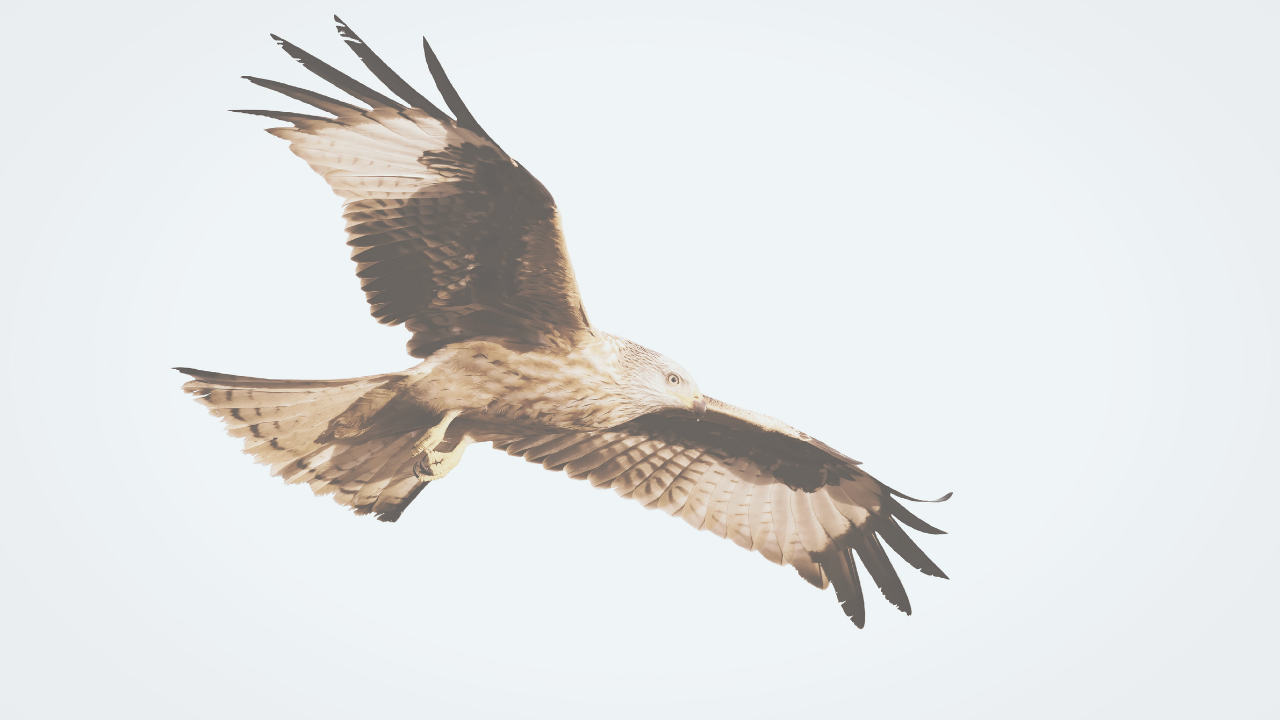
A hawk, perched at the edge of her nest, soaring back and forth from the tree as we wait. We think there are babies up there. We stand and watch her move — purposeful, unhurried, completely indifferent to the schedule happening beneath her. Back and forth she goes. Majestic is the word that comes, and I let it.
Nobody moves. Nobody needs anything. We just watch.
Wild Mothers
She isn’t fighting her instincts. She isn’t taming herself, and she isn’t letting anything tame her. She is going with what is provided, using it to her advantage, getting back to her nest, to her babies — all the while remaining exactly who she is.
As I turn for home, my two youngest beside me, I realize I am her.
Wild Mothers.
Not everything in us is meant to be tamed.
Some things just need space to stay.
If you want a place to return to that — beyond the screen —
I’ve made a few quiet journals to sit with.